If Amazon charged you for an item you returned, match the new transaction to the exact order, item and return record before deciding what went wrong. An earlier refund, a carrier receipt and a completed return are different records. Use the decision guide below to identify the missing evidence and prepare a focused support request.
This guide covers Amazon.com purchases in the United States. It explains a record-checking process; it cannot see your account, decide whether a charge is correct or promise a refund. Check the current instructions attached to your own return.
Why a charge can follow an earlier refund
Amazon’s official refund guidance describes an advanced refund as one issued when a carrier first scans the return, before Amazon receives and processes it. That sequence matters: seeing money credited does not by itself establish that the return has completed its later processing steps.
The same guidance explains that an advanced refund or replacement can lead to a charge if Amazon does not receive the return within the return window. It says Amazon sends a reminder first, then a notice and charge, and that charges are reversed once the return is received and processed. This is the policy’s stated sequence, not a finding about your parcel. Do not assume it explains your charge until the item, notice and transaction match.
A smaller refund can raise a different question. The Amazon Return Policy lists possible return shipping, late, damage and restocking fees, with conditions that vary. A fee deduction and a new transaction for an earlier advanced refund require different questions. Ask which type of adjustment Amazon recorded rather than inferring it from the amount alone.
Start with the transaction, then follow the branch
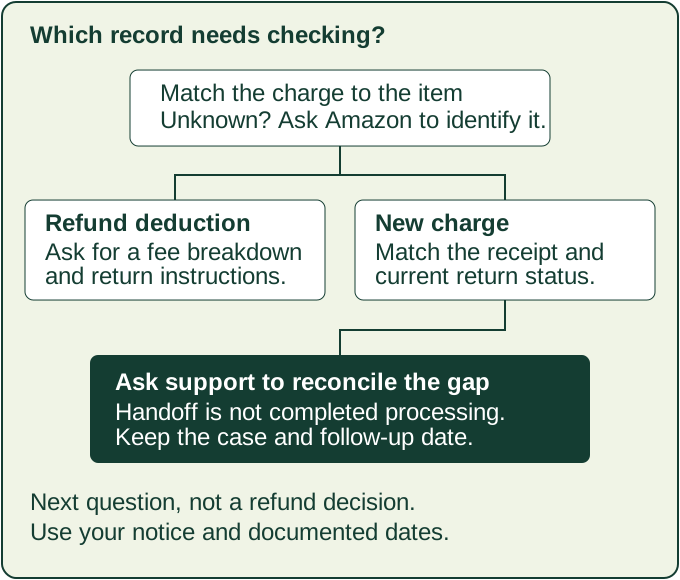
First, open the transaction details in your payment account. Record the amount, currency, date and whether your provider labels it pending or posted. Then compare the entry with the order total, the refunded amount and any replacement order. A familiar amount is a clue, not proof that two entries concern the same item. Avoid combining charges from several orders into one unexplained total.
Next, check the order and return details through Amazon directly. Read any email or account notice explaining the new charge. If the item or transaction still does not match, ask Amazon to identify the order associated with that entry. Keep unfamiliar-transaction questions separate from a dispute about a return you recognize. The tool produces a next question from your selections; it does not determine liability or initiate a claim.
The item matches, but you cannot find a drop-off record
Look for a receipt, a carrier acceptance confirmation or the return-location confirmation associated with that return. A return authorization or unused label shows that a return was initiated; it does not itself demonstrate that the parcel was handed over. Keep that distinction explicit when describing what you know.
If you cannot locate proof, say so. Ask the approved drop-off location or carrier what records it can provide, and ask Amazon which return stage is missing. Do not create a date from memory and present it as a documented scan. If you have a receipt for several items, list which item each receipt entry concerns and where that mapping remains uncertain.
You have a receipt, but the account still asks for the item
Check that the receipt and label belong to the specific return, including the correct order and item. Amazon’s refund guidance says to use the correct return label and approved locations. Its return policy says to follow each item’s instructions and not include items from separate orders in the same return. A tracking number from another package will not resolve an item-level mismatch.
Save the receipt and the carrier’s current tracking history. Ask Amazon to reconcile the documented handoff with the return status and the recharge notice. Describe the discrepancy without claiming that a carrier scan proves the contents were inspected. If you used the wrong label or combined items, explain exactly what happened so support can investigate the correct records.
Tracking shows delivery, but the return remains unresolved
Keep the delivery date and tracking reference alongside the order’s current return status. Delivery information and Amazon’s processing decision are separate pieces of evidence. Ask support to review the item-level processing record and explain what remains outstanding. Do not describe the case as resolved solely because the carrier page says delivered.
Amazon’s policy says receipt and processing can take up to 30 days, and longer in some circumstances. Its refund page directs customers to contact Customer Service if more than 30 days have passed since returning an item without a refund notification. Those statements do not create a new deadline for a posted charge or guarantee that every return qualifies for a refund. Use the dates and instructions in your own case when asking for a review.
The return appears complete, but the charge still stands
Put the completion message, any refund confirmation and the new charge side by side. Check whether the refund went to the original payment method or another destination shown in your account. Amazon notes that the method and amount can vary; its guidance also describes refunds going to an Amazon balance when the original payment method cannot be used.
Ask Amazon to explain the exact adjustment and confirm whether any reversal has been issued, to which destination, and on what date. If a reversal has been issued but is absent from your payment account, take that reference to your payment provider. A support statement that a request was submitted is not the same as confirmation that a credit was issued.
Send a short evidence-led support request
Open Amazon’s site or app directly and use the support path available for the order. Avoid entering account details through a link in an unexpected message. Keep the request centered on one item and one unexplained charge. A clear first message can be as simple as:
I am asking about a charge dated [date] for [amount] connected to order [order number], item [item]. I returned it using [method] on [documented date]. My evidence is [receipt or tracking reference]. The order currently shows [exact status], while the charge notice says [brief description]. Please reconcile these records, explain the reason for the charge and confirm the next step and case reference.
Replace only the fields you can substantiate. If a date or item mapping is unknown, label it unknown. Share evidence through the retailer’s official support channel; redact unrelated purchases, full payment numbers and unrelated personal details from attachments. Keep copies of the documents you submit and the response you receive.
For a seller-fulfilled marketplace order, the return can go to the seller instead of Amazon. The return policy explains this distinction. Identify who fulfilled and shipped the order before assuming an Amazon warehouse received it. Ask support which party is responsible for reviewing the return record in that order.
Keep follow-up dates and outcomes separate
After each contact, record the date, case reference, the specific action promised and the stated follow-up date. If support requests more information, keep a list of what was requested and what you supplied. Follow up against the actual promise rather than an invented standard waiting period.
If the charge remains unresolved, contact your payment provider promptly to ask about the process, evidence and deadlines that apply to your account. Explain that the purchase was yours but the return-related adjustment is disputed when that is the situation. This guide does not establish dispute rights, time limits or a likely outcome. Do not wait for an informal support promise without checking any deadline your provider says applies.
A fictional example shows why the records matter: a shopper receives an advanced refund, later sees a new charge, and has a drop-off receipt but no completed-return notice. Their first useful request is to reconcile that receipt with the specific item and charge. The example does not prove Amazon made an error, and the decision guide does not calculate money owed.
For planning a future return, use our return shipping cost guide. If an order is still arriving in separate parcels, match each item to its parcel before mixing delivery and return records.